The Best-Performing Short Stays Rarely Start With a Listing
There’s a version of this that sounds very easy. Take a few photos, write a quick description, put the property online, wait for bookings. Simple. It also skips the most important part.
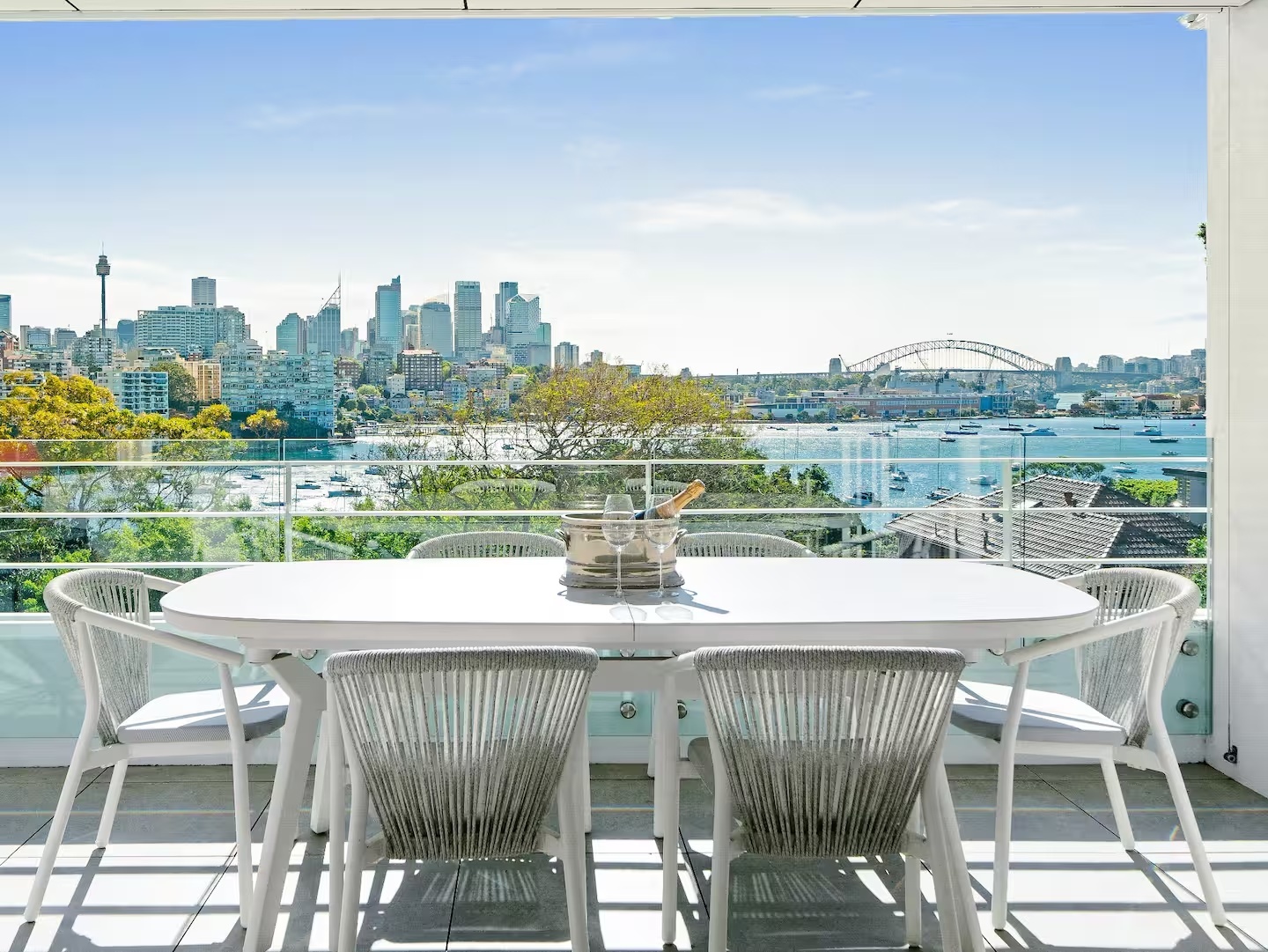
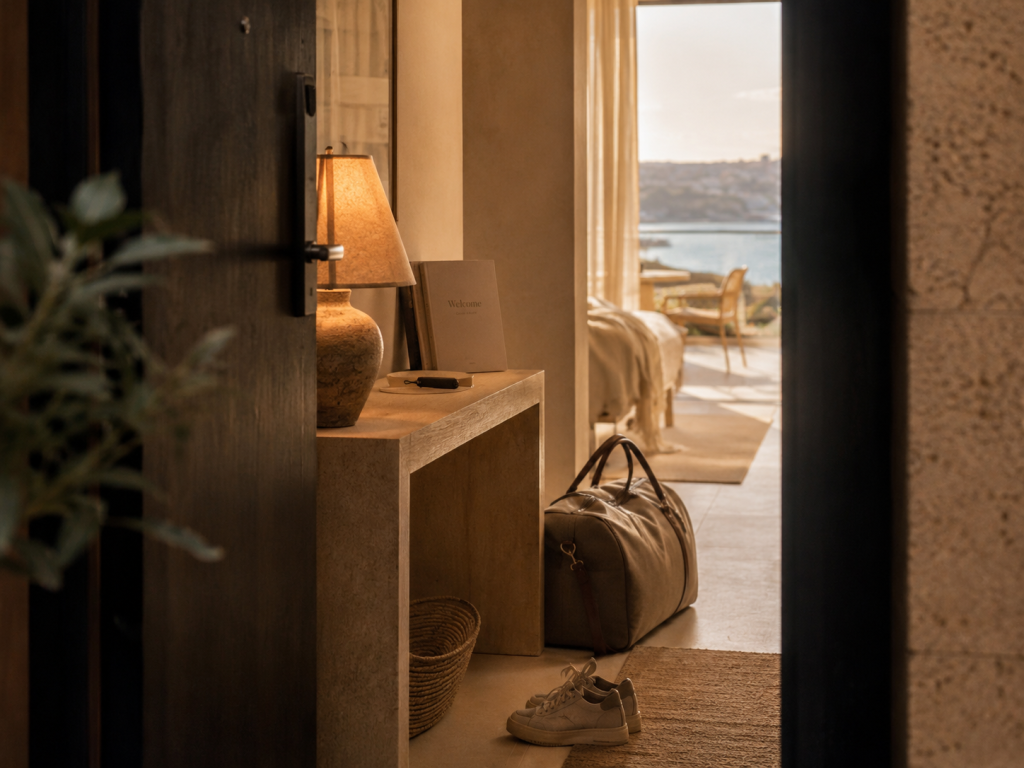
The best-performing short stays don’t start with a listing. They start with the question, “Would this feel easy to walk into after a long day?” Because that’s what guests are really booking. Not just space, but how that space feels when they arrive tired, late, or needing things to just work. And in Sydney specifically, the gap between “listed” and “well set up” is where the money is made.
The market is bigger than people realise.
Sydney pulled in 14.87 million visitors in 2025 alone, made up of 3.53 million from overseas and 11.34 million domestic. They spent $23.09 billion in the city, and 2026 is tracking past 15 million. That’s a huge pool of people looking for a place to stay.
But the supply side is just as crowded. There are around 12,500 active short-stay listings in Sydney at any given time. And here’s the bit owners don’t always know: roughly 20% of listings take roughly 80% of the bookings and revenue. So the question isn’t really, “Can I get my property online?” The question is, “Can I get my property into that top 20%?” That part isn’t won by listing harder. It’s won by setup. This is exactly where TAS focuses owners’ attention from day one, because we know which 20% Sydney guests actually book, and what it takes to sit inside it.
What setup actually means.
Setup isn’t styling. It’s whether the space works. A sofa that’s actually comfortable. A kitchen that’s properly equipped. Bedside lamps where people expect them. Enough storage. Blackout curtains that actually block light. These sound like small things until they’re not.
In a recent industry survey, 97% of travellers said available amenities directly impact their experience. 85% filter their search by Wi-Fi, 72% by a full kitchen, 63% by parking, and 58% by washer/dryer. 59% rate air conditioning as the single most important indoor amenity, ahead of Wi-Fi and kitchens. If your property is missing one of those, you’re not just losing reviews. You’re being filtered out of the search before a guest ever sees the photo.
A fully equipped kitchen alone is linked to 15 to 25% higher nightly rates and 30 to 45% longer stays. These aren’t styling choices. They’re revenue choices. TAS runs a filter-by-filter audit on every property we take on, so the basics that guests actually search for are in place before a single night is sold.
Photos do more than people think, but only if there’s something good to photograph.
Industry analysis of more than 100,000 short-stay listings found professional-quality photos lift bookings by around 28% and can drive revenue up by as much as 40%. On the other side, listings with weak imagery earn 15 to 25% less per night, and their click-through rates are 30 to 50% lower. Half of your potential guests never even click in.
But here’s the catch most owners miss. Professional photos don’t fix a poorly set up property. They reveal it. You can’t photograph a missing kettle. You can’t filter your way around a lumpy mattress. The lens just shows what’s actually there.
This is why TAS spends time getting the property right before a single image is taken. The focus isn’t on “making it look pretty.” It’s on making sure that what the camera sees is what the guest will actually enjoy on night three, and that the photos can be trusted to over-deliver, not over-promise.
The cost of not setting up, in actual numbers.
Here’s the maths nobody runs before they list. Sydney’s median short-stay average daily rate sits around $258, with average annual revenue per active listing landing near $71,000. Median occupancy across well-managed properties trends around 78%, but the citywide average across all listings is closer to 48 to 50%. In plain English, the gap between an average Sydney listing and a properly run one is comfortably $20,000 to $30,000 a year.
Now layer the photo and review effects on top. Weak photos cost a property 15 to 25% per night. A review average that slips from 4.9 to 4.6 can pull ADR down by another 18 to 23%. Stack those compounding hits across a 12-month calendar and a “fine” Sydney property can easily be leaving $25,000 to $40,000 on the table without ever knowing it. That’s not a styling problem. That’s a setup problem, and it’s the exact gap TAS exists to close. When we take a property on, we map the revenue it should be earning against the revenue it’s actually earning, then work through the specific levers that close the gap.
The small things that quietly tank a review average.
Ratings below 4.8 don’t usually come from one disaster. They come from a stack of small irritations the guest didn’t expect to deal with. Wi-Fi that drops in the back bedroom. A shower head that points at the wall. One frying pan, no lid. Bins that aren’t labelled. Streetlight glare straight onto the pillow. Check-in instructions that say “lift to level 4” when the lift actually stops at level 3.
Each one of those is a half-star. Half a star, repeatedly, is what separates a 4.9 listing from a 4.6 listing. And as the numbers above show, that gap is worth real money. This is exactly the kind of audit TAS runs on a property before it ever goes live. Not a styling pass. A use pass. We walk the property the way a guest does, from the front door inwards, and fix the irritations before they turn into reviews.
Reviews are now the price tag.
In Sydney’s market, the difference between a 4.6 and a 4.9 average review isn’t small. Listings rated 4.9 or higher command average daily rates 18 to 23% higher than comparable listings rated 4.5 to 4.7. Top-rated hosts, properties holding a 4.8+ average over at least 10 stays with a 90% response rate and under 1% cancellations, earn around 64% more on average than the rest of the market. They also convert browsers into bookers at 20 to 30% higher rates.
Reviews aren’t a vanity metric. They’re a price multiplier. And reviews are not really written about photos. They’re written about how the place felt to stay in. The towel rail that wasn’t where it should be. The Wi-Fi that dropped. The check-in instructions that didn’t quite line up. That’s why setup is the part that decides where your ratings land, not the listing. TAS protects that score by handling the guest-facing detail every day a property is live: arrival communications, on-the-ground response, and the small fixes that stop a 5-star stay from quietly becoming a 4.
Sydney rewards properties that can flex.
There’s another layer to this specific to Sydney. The same property might appeal to completely different guests at different times: holidaymakers, business travellers, relocating families, longer corporate stays.
Domestic overnight visitors in Sydney stay an average of 2.8 nights. International visitors stay an average of 23.9 nights. Across the broader short-stay market, average length of stay grew nearly 10% in 2025, from 4.0 to 4.42 nights. Major booking channels now average between 6.7 and 7.5 nights per stay. That’s a calendar with very different shapes of demand on it.
There’s also the policy layer. Non-hosted short-term rentals in Greater Sydney are capped at 180 days a year. But, and this is the part that changes the maths, bookings of 21 nights or more don’t count toward that cap. So a property that can comfortably host a relocating executive for three weeks, a corporate visitor for a month, or a family between homes for six weeks isn’t just earning revenue on those stays. It’s protecting the rest of its calendar for short, high-rate guest nights too.
Corporate demand is the other tailwind. Australia’s extended-stay and serviced apartment segment is forecast to hit around $3.8 billion by 2035, growing at about 5% a year. Corporate professionals are expected to account for almost half of that revenue by 2027. A well set up Sydney property can pick up all of that demand. A purely “weekend rental” style property can only pick up a slice.
That’s why TAS deliberately positions every property across the full guest mix, from a few nights through to several months, and connects it into a wide range of booking sources rather than relying on a single channel. A “ready” property doesn’t just look better online. It works harder across the whole calendar, and the calendar is what TAS is paid to maximise.
Why setup decides the listing, not the other way around.
A lot of owners think setup is optional. A nice extra. A “one day” project. In reality, it’s the part that decides what kind of listing you end up with. Setup decides which guest segments you can serve. Setup decides what you can charge. Setup decides which reviews you get. Setup decides whether you sit in the top 20% of Sydney listings or the bottom 80%.
The listing is the storefront. The setup is the product. If the product isn’t right, no amount of storefront work fixes it. TAS treats the product as the job, not an afterthought, which is why owners on our books tend to sit in the upper end of the Sydney market rather than the middle of it.
Where TAS comes in.
This is the part TAS gets asked about most. “Is my place ready?” “What should I change?” “Am I leaving money on the table?” If you’re not sure where your property sits right now, TAS can walk through it with you and show exactly what would lift it, and what’s already working.
Because the best-performing short stays don’t start with a listing. They start with a walk-through. And from that walk-through, TAS handles the rest.
Author: Neil Sturdy
Published: 21/05/2026